


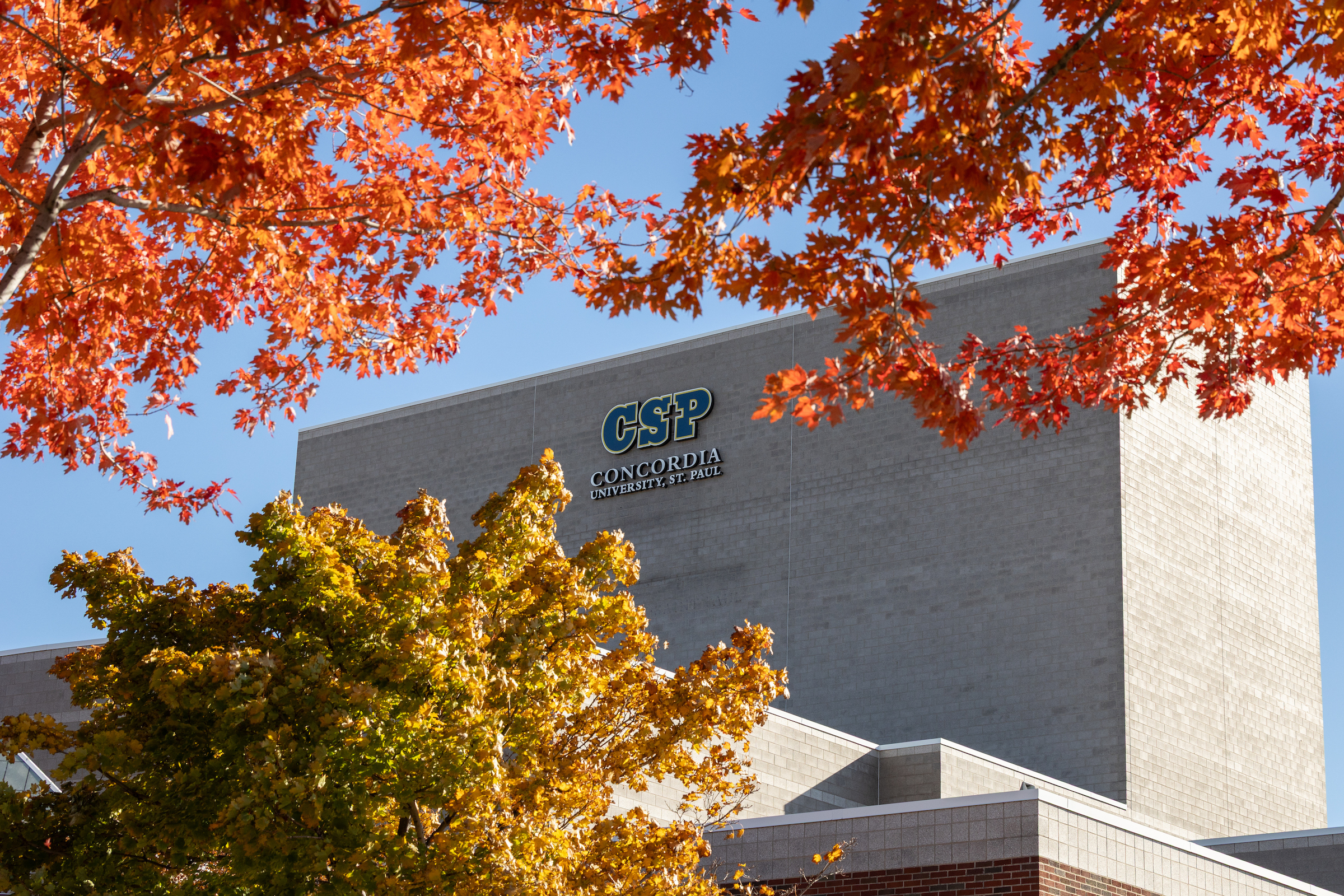
The final census for Fall 2026 puts Concordia University, St. Paul enrollment at 5,440 students across all academic programs. That’s down from 5,797 last fall, a decline the university anticipated as federal visa changes reduced international graduate enrollment nationwide.
International graduate students account for the bulk of the change. That group dropped from 199 students last fall to 46 this fall. Excluding international graduate students, total enrollment came in within 4 percent of last year.
Undergraduate enrollment remains strong. Total undergraduate enrollment across CSP and CSP Global reached 3,553 students, up 192 from Fall 2024. Global undergraduate enrollment set a record for the second straight year at 1,518 students. Traditional undergraduate enrollment came in at 2,035, the second-highest total in university history. New transfer students increased 15 percent, from 185 to 212.
Growth Areas
Nursing continues to grow across our three campuses. St. Paul pre-licensure nursing enrollment rose 25 percent to 219 students, and the St. Paul Accelerated Bachelor of Science in Nursing program grew 19 percent to 230. The Denver ABSN program grew from 17 to 28 students in its second year, and Portland ABSN enrollment held steady at 395.
Several graduate programs also posted gains. The Doctorate in Education grew from 115 to 129 students. MBA enrollment rose about 27 percent, led by new specializations in project management, organizational management, and digital marketing. The Educational Technology and AI emphasis grew from 6 to 23 students.
Concordia University, St. Paul now enrolls 555 first-generation students in its traditional undergraduate programs, the highest number in university history and up from 527 last year.
“The students choosing Concordia University, St. Paul are telling us what they need: programs that lead directly to careers, at a price they can manage,” said Dr. Kimberly Craig, vice provost for CSP Global. “Nursing, business, and education are where we see that demand most clearly, and Tuition Reset 2.0 makes those paths more accessible for the students who come next.”
Tuition Reset 2.0, announced Sept. 9, lowers undergraduate tuition by $5,500 beginning with the 2027-28 academic year. Early application activity for Fall 2027 is showing strong increases compared to one year ago. Admissions teams will have a clearer picture as the cycle progresses.